Education
AUB Medical Students Begin Clinical Rotations at QEH
Ten medical students from the American University of Barbados have commenced clinical rotations at Queen Elizabeth Hospital, marking a significant milestone for the university after 13 years in operation.
4 min read
Originally published by barbadostoday.bb (opens in new tab)
The American University of Barbados (AUB) med students have officially begun clinical rotations at the Queen Elizabeth Hospital (QEH), in a major development for the medical school after 13 years in Barbados.
Clinical rotations are the stage of medical education where students leave the classroom and spend set blocks of time in different hospital and clinic departments, working on real patient care under supervision.
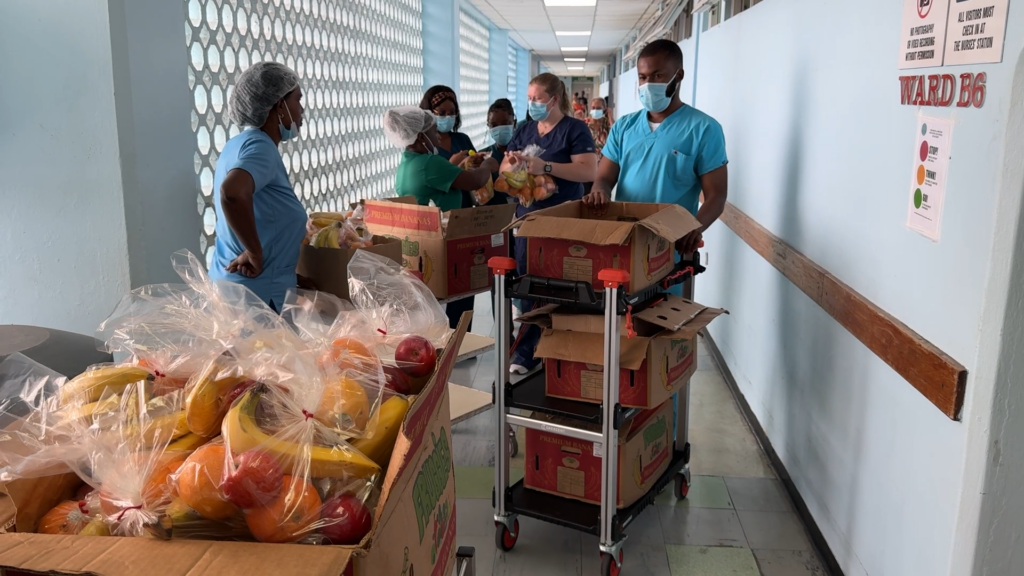
Ten AUB medical students started their rotations at the QEH on Friday, while three others began training at the Psychiatric Hospital. The occasion was marked with the distribution of 500 fruit bags to patients across the QEH, an annual outreach initiative the university said was also being used this year to celebrate the start of the new training arrangement.
Director of Medical Services at the QEH, Dr Carlos Chase, said the hospital had accepted both interns and medical students from AUB, noting that the interns started about two months ago.
He said the partnership reflected the hospital’s expanding role as a training institution for medical students and graduates from different universities.
“We’ve improved and expanded our capacity for students from different universities and this will help to enhance our standing in the region as a centre of excellence for training both undergraduate and postgraduate students,” he said.
“We hear a lot of bad things about the hospital, but we have a lot of good going on and a lot of good that goes unrecognised. The training programme at UWI and QEH has been one of the outstanding beacons at this institution.”
Addressing the media on Friday, Chief Executive Officer at AUB, Anita Bhat described the start of rotations as the fulfilment of a long-held goal for the university, which has operated in Barbados for nearly 13 years.
“This was our dream ever since we started the school,” Bhat said. “It is a historic moment for us and we are very excited.”
AUB students previously had to travel overseas, including to the United States and Guyana, to complete clinical rotations.
Bhat said the partnership was not only important for the university and its students, but also for the wider Barbadian community.
“This is not only good for the school but also for the students and also for the greater community because we bring the economy and also we do a lot of volunteer work here,” she said.