Business
Agriculture Minister Dr Shantal Munro-Knight argues that Caribbean debt issues stem from global climate vulnerability and historical inequities, rejecting the notion of 'sovereign debt' as misleading.
6 min read
Originally published by barbadostoday.bb (opens in new tab)
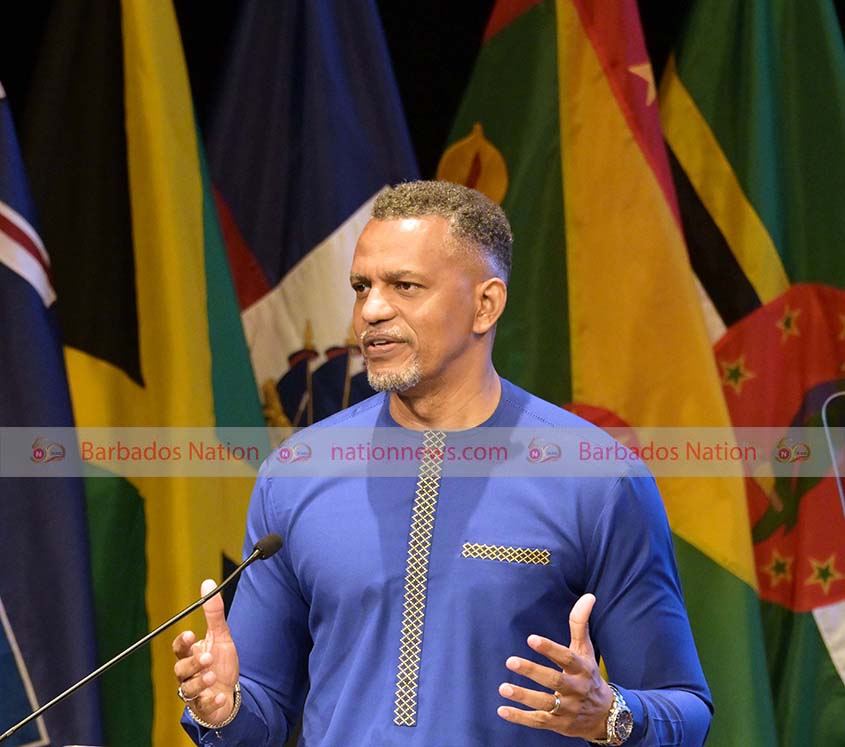
Agriculture Minister Dr Shantal Munro-Knight has rejected the very notion of “sovereign debt”, arguing that the region’s mounting liabilities are rooted not in domestic policy failures but in a global system shaped by climate vulnerability and historical inequities.
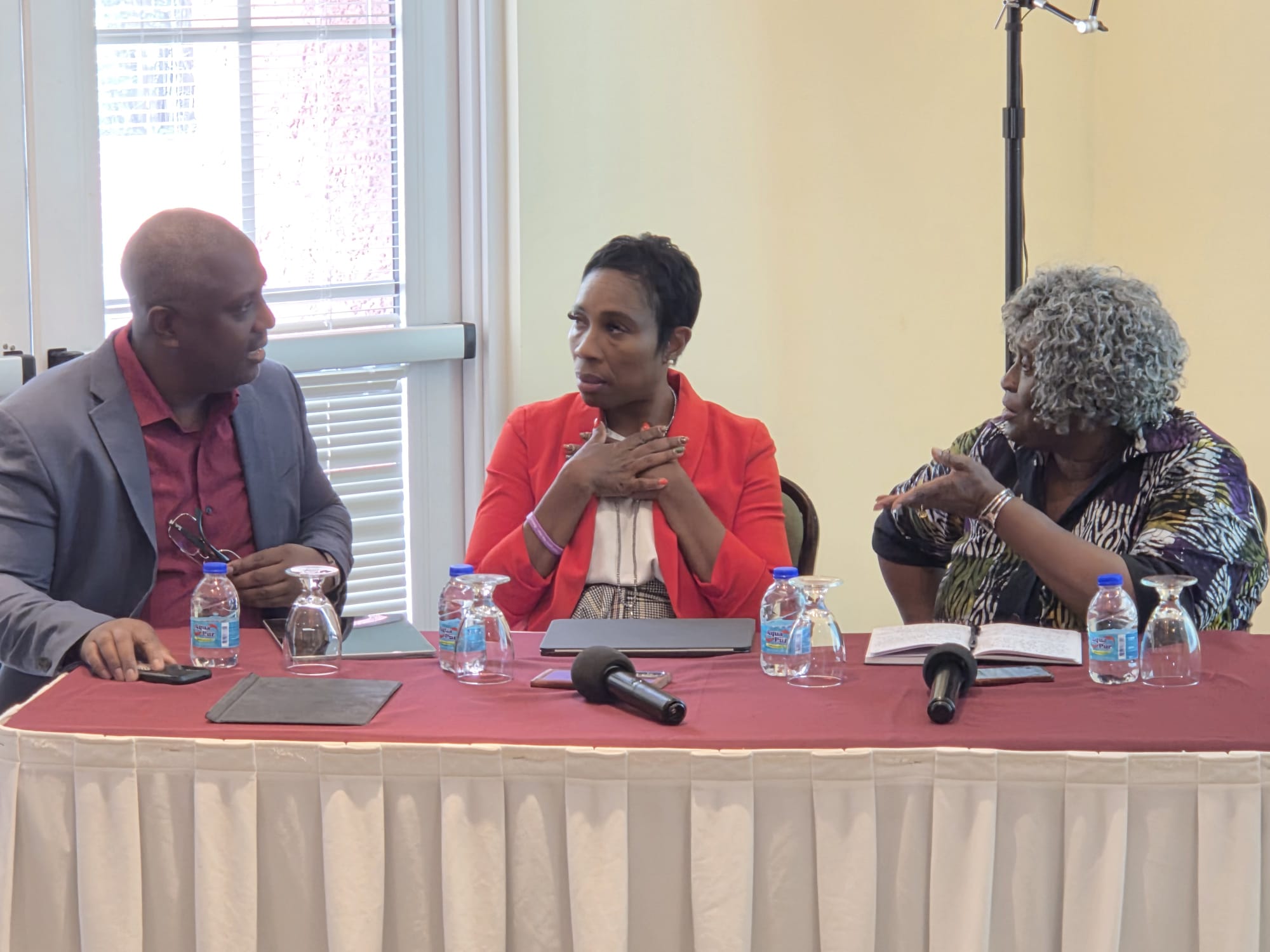
The minister, a former executive director of regional non-governmental umbrella the Caribbean Policy Development Centre, made the comment as the CPDC launched its documentary Tides of Debt at the Marriott Hotel on Wednesday afternoon
Dr Munro-Knight argued that the financial chokehold gripping the region is inextricably linked to climate change and inadequate international financial architecture.
She called on Caribbean nations to continue innovating their way out of crisis, pointing to Barbados’ own dramatic economic turnaround as proof of concept.
The minister took direct aim at what she described as the nomenclature used by global financial institutions, invoking the literary theory of Nigerian writer Chimamanda Ngozi Adichie to warn against viewing Caribbean economic struggles through a “single lens”.
“I stay away from that notion of sovereign debt. I don’t like it,” Dr Munro-Knight declared. “Because even that word, ‘sovereign debt,’ it makes it national; it makes it country-owned. If you understand all of our history, we would know that our challenge of debt is nuanced, it’s systemic, it’s structural, it’s global, and it is historical. That notion of sovereign debt as being owned nationally as having a place within the context of what countries singly do—we need to be able to repudiate that.”
To illustrate the point, the forum featured data showing how Caribbean debt accumulation is driven by climate vulnerability rather than domestic overspending.
According to cited Inter-American Development Bank (IDB) data, a single major climatic event causes a country’s public debt to jump by 10 per cent immediately, escalating to an 18 per cent increase just three years later.
Dr Munro-Knight explained that this exact realisation propelled the creation of the Bridgetown Initiativepolicy framework aimed at reforming the international financial system. She criticised traditional lending institutions for their bureaucratic delays, which often leave vulnerable nations exposed during crises.
“You’ve got to take two years to write the proposal before then you can get the readiness grant to get ready, then to do the actual proposal, and by that time two hurricanes, a flash flood, ash fall, and everybody dead—but we’re still waiting on the release of funds,” she stated. “The Bridgetown Initiative said hold on, stop. Let’s re-look. Let’s restructure.”
The minister highlighted the difficulty small islands face when attempting to follow international directives to “mobilise private finance”. She noted that the local private sector remains small and risk-averse, making international de-risking mechanisms essential.
“The Bridgetown Initiative did not develop such a resonance because it was a Barbados initiative, but because it was able to galvanise and speak loudly to a problem that before we only whispered,” she said. “We either lie down, play dead, or we get up and we act in the moment.”
Defending the island’s economic strategies, Dr Munro-Knight recalled the dire fiscal reality Barbados faced in 2018, burdened with a 176 per cent debt-to-GDP ratio—the third highest in the world—and a mere 6.6 weeks of import cover while simultaneously staring down Tropical Storm Kirk.
To create fiscal breathing room, Barbados pioneered pandemic and natural disaster clauses in its bonds, allowing the government to temporarily pause interest payments to creditors in the wake of a catastrophe. It also executed pioneering debt-for-climate swaps.
The strategy, though heavily criticised by international observers at its inception, yielded dramatic results.
The minister revealed that the debt restructuring realised $165m in capital and $125m in savings.
“That $125m in savings didn’t disappear into some vortex of the government, but we put that right back into a sustainability trust in order to address environmental challenges for Barbados,” Dr Munro-Knight explained, noting the funds directly financed the south coast reclamation and wastewater project to provide agricultural irrigation.
“When Barbados restructured its debt and went to the international market in 2018, everybody said it would fail,” she continued. “Look at where we are now. A 176 per cent debt-to-GDP ratio; right now, we’re at 93.3 per cent — the lowest under 100 per cent ever for Barbados. The metrics show that it worked. We can’t be afraid.”
Turning her attention to her current ministerial portfolio, Dr Munro-Knight connected fiscal innovation directly to food security and regional survival, stating that Barbados has explicitly tied its growth metrics under the Barbados Economic Recovery and Transformation (BERT 3.0) plan to the reduction of its food import bill.
She revealed that Barbados imported $8.6m in produce last year, despite a strategic crop escalation plan identifying 16 specific crops that can be grown locally at a fraction of the import cost.
Reflecting on her previous career in trade negotiations with the CPDC, she recalled the systemic biases embedded in global trade policies, citing a past World Trade Organisation negotiation where an American official explicitly told developing nations that attempting to feed themselves was an “anachronism of bygone days”.
“She was saying basically… import all the foods because they’re cheaper than what you think that you need to then be investing in food production,” Dr. Munro-Knight recalled. “The structural inequalities and the constraints of debt force the region into situations where we are making hard choices—we call it the developer’s dilemma.”
Under the government’s current multi-sectoral framework, “Mission 2” has been established to legally and socially safeguard water and food security. The minister concluded by urging civil society to maintain their historical memory regarding these concepts, warning against allowing global entities to sanitise the language of resilience.
“Food security for us, yes, is a goal within itself, but we understand fundamentally that it is growth. It is national development,” she concluded. “What we are doing is not just about growing. We are feeding a nation, but in feeding a nation, we’re also changing a cultural pattern. It is about people fundamentally. It is about how we feed our children, how our children through generations will have a relationship with land and ownership of land. If we allow others to define that and remove our relationship from the earth, then part of us as people of the Caribbean is going to be lost.”
(RR)